


08 Sep 50 years later: Reliving the Judgment of Paris
Almost 50 years ago, one wine tasting changed the world of wine forever.
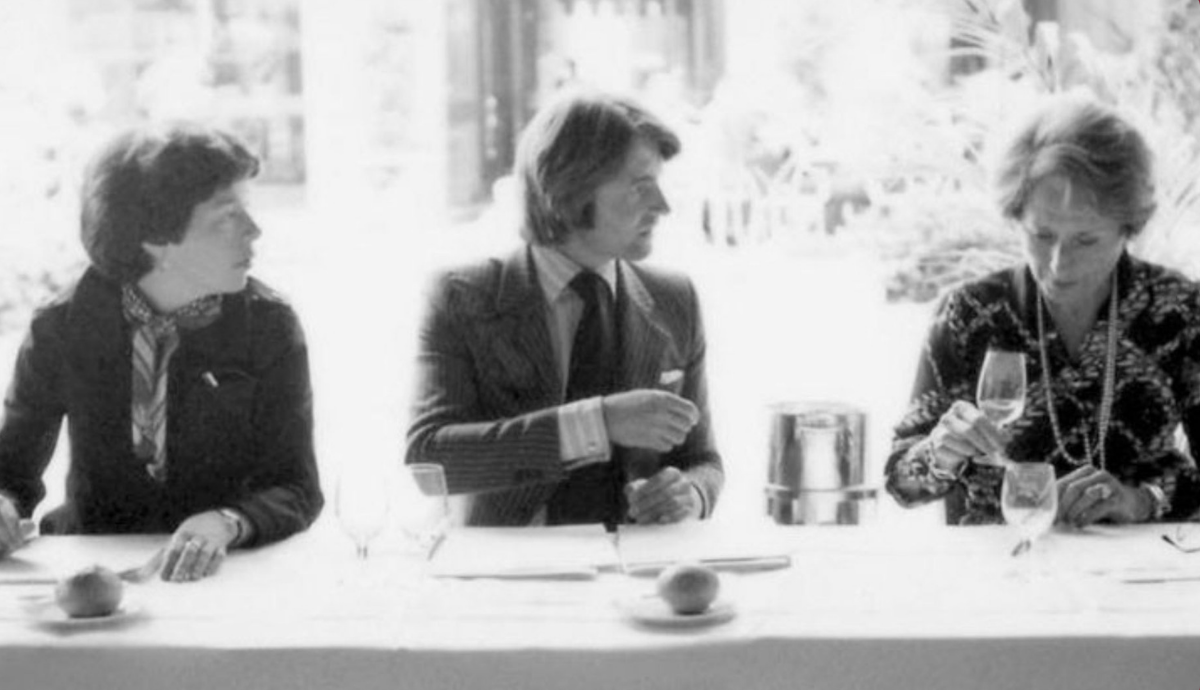
British wine merchant Steven Spurrier hosted a blind tasting on May 24, 1976, in Paris. In a stunning upset, American wines — then largely dismissed by the European establishment — triumphantly bested France’s finest. That single event, forever known as the Judgment of Paris, redefined the global wine landscape.
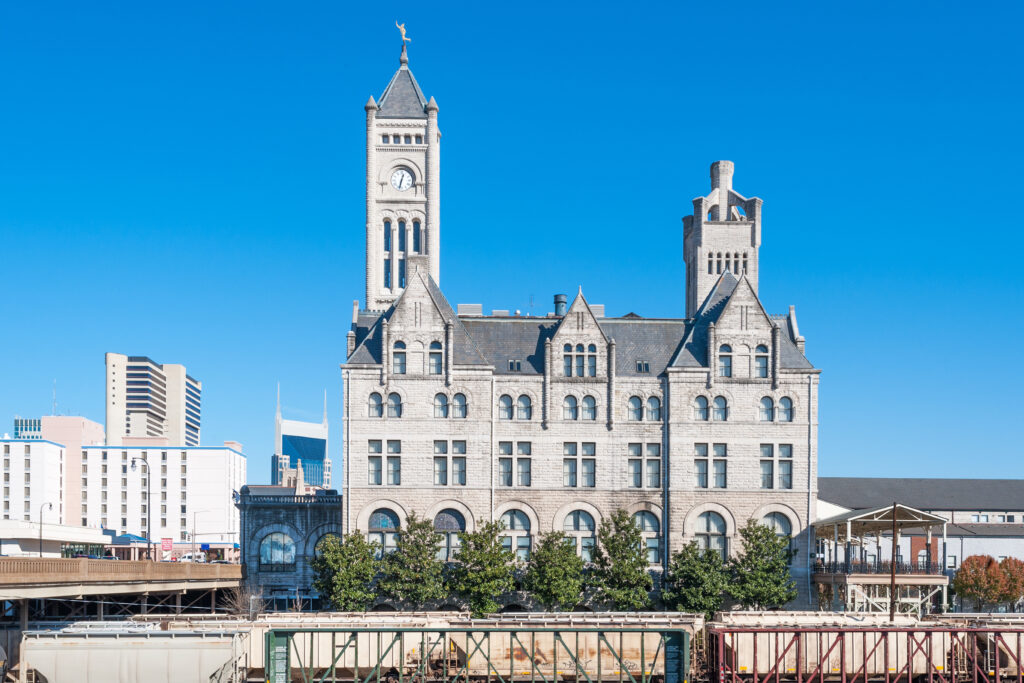
Now, exactly 50 years later, you have the rare opportunity to get a taste of what this iconic day may have been like… Not as a spectator, but as a judge. On April 11, 2026, 42 fortunate guests will gather at Nashville’s historic Union Station Hotel to participate in a re-enactment of the Judgment of Paris. While each wine vintage presents the characteristic of the year, the tasting will faithfully honor the original vintners and rules of the contest with vintages 50 years from the original tasting.
Not familiar with this fateful day? This blind tasting positioned Burgundy Chardonnay against California Chardonnay and Red Bordeaux against California Cabernet Sauvignon. It began with 20 wines being served one by one. Starting with white wines, the nine tasters ranked them using a point scale. Their marks were added up and divided by nine (for the number of tasters).
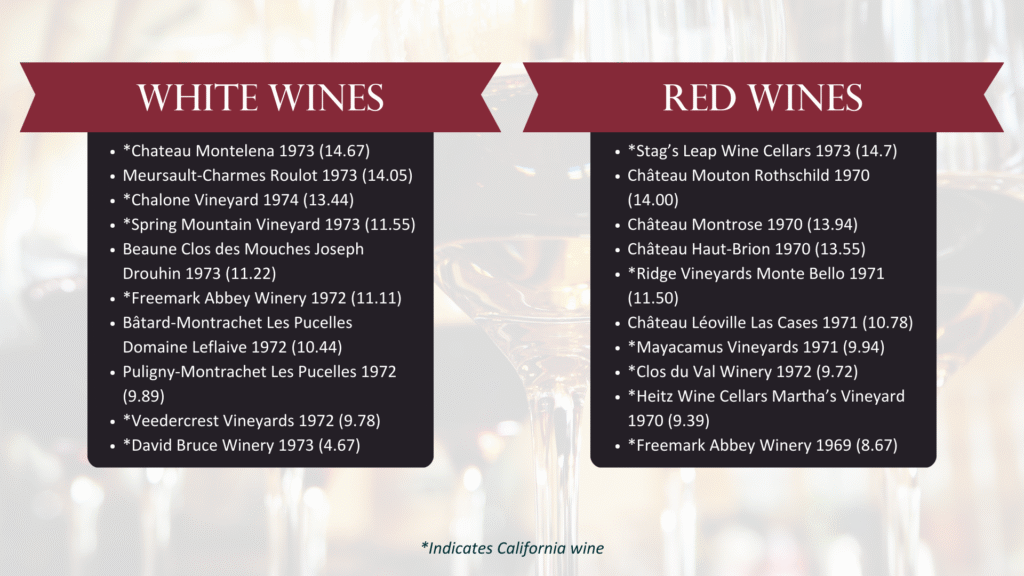
Chateau Montelena Winery (1973 Chardonnay) and Stag’s Leap Wine Cellars (1973 Cabernet Sauvignon) took top marks and three California whites and two California reds were in the top five.
Once the results were shared around the world, the telephone rang off the hook at Stag’s Leap Wine Cellars.
“The Judgment of Paris is never far from our minds. It’s part of the fabric of Stag’s Leap Wine Cellars. The winning 1973 S.L.V. Cabernet Sauvignon showed the world that Napa Valley could stand alongside the world’s great wine regions, and it gave us both a legacy and a responsibility,” Stag’s Leap Wine Cellars Winemaker Marcus Notaro says. “It’s less about looking back and more about the standard that milestone set. Each vintage, we do what’s necessary to be worthy of that moment. It keeps us focused on the vineyard, on letting the land speak through the wine, and on making sure every bottle shows the sense of place that made the 1973 vintage so memorable.”
The first time Notaro walked through the rows of Stag’s Leap Wine Cellars’ vineyard, where the grapes of for the Judgment of Paris wine were grown, he instantly felt a deep sense of connection.
“There’s an energy there—it’s humbling. I remember thinking, ‘This is where it all began,'” Notaro says. “That moment cemented for me that winemaking is about honoring place and history as much as it is about technique. I often say the vineyard tells the story; my role is simply to help translate it.”
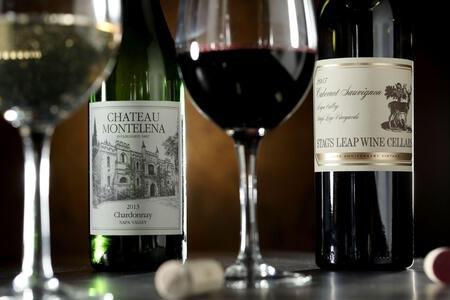
For Chateau Montelena, the Judgment of Paris gave the winery more opportunities, opening doors globally.
“The Judgement of Paris was a defining moment not just for Chateau Montelena, but for the wine industry around the world,” Chateau Montelena CEO Bo Barrett says. “That moment catapulted us onto the global stage and validated a belief we already held: that world-class wine could come from California.”
Chateau Montelena considers each of their wines to be an embodiment of a specific place in time and the spirit of 1976 still carries through in their winemaking.
“The event was a unique moment and can’t be re-created or re-staged, despite numerous attempts over the years. We view our wines through the same lens: every vintage is distinct and there will never be another 2025, just as there will never be another 1973,” Barrett says. “I think we do have a stronger identity as a region and as a brand being 50 years removed from the tasting. That sense of identity (and the confidence in it) allows for authenticity and perspective in our winemaking.”
“We are Napa Valley. We’re not France and we don’t have to model our wines after theirs. The tasting was the spark that catalyzed that recognition and conviction.”
The Judgment of Paris garnered international attention, challenging the long-held notion that French wines were the only ones of high quality. The success of the California wines in the tasting encouraged investment and innovation in the American wine industry, leading to a boom in production and quality.
It is no coincidence that the first vintage of ‘Opus One’, the Napa Valley joint venture between Philippe de Rothschild and Robert Mondavi, was in 1979, just three years later.
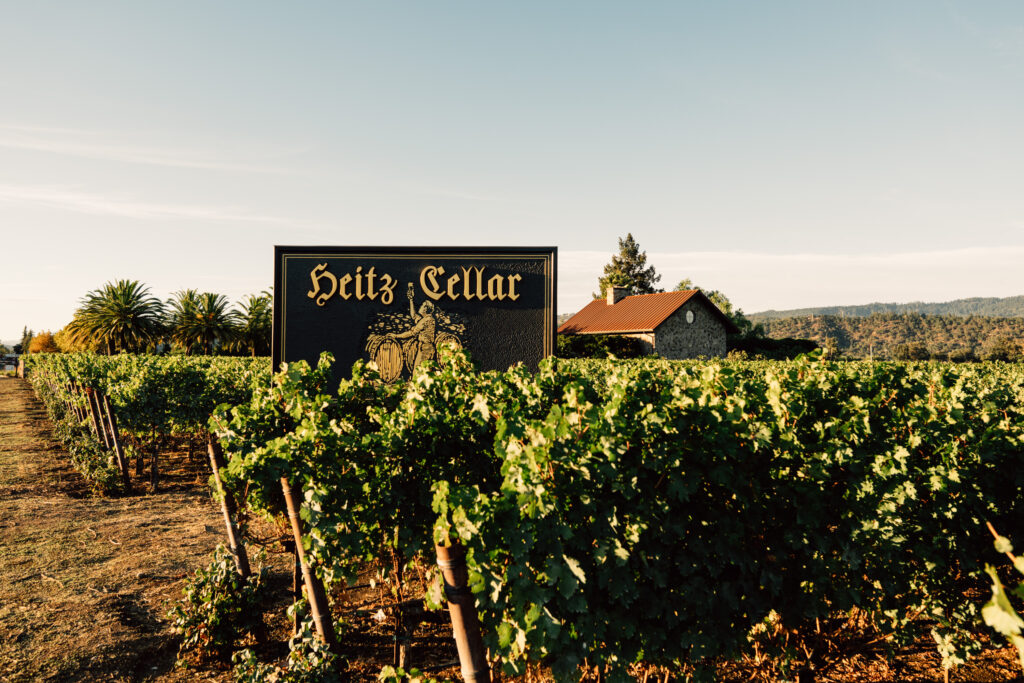
Inclusion in the tasting also placed Heitz Cellar among the elite of Napa Valley and validated its quality alongside prestigious French wines. In 2018, Gaylon Lawrence Jr. purchased the estate, launching a new era for Heitz Cellar under the Lawrence Wine Estates umbrella.
“As a young American sommelier, learning about this event gave me great pride in the wines of our nation.” Master Sommelier and Chief Executive Officer for Lawrence Wine Estates Carlton McCoy says. “And with that we have a great obligation to craft wines that are even better than those that came before us.”
The Napa Valley is still a young region and McCoy believes the Californian wineries have proven a consistent track record of quality, especially since that tasting in 1976.
“I would argue that the current energy in the region is more exciting, with a greater diversity of styles that in many ways express the diversity of terroir better,” McCoy says. “No longer simply chasing critic acclaim. We are better connected with the small plots of land that we are so blessed to oversee.”
The Judgment of Paris marked the beginning of global recognition for New World wines. But this re-enactment isn’t just about wine — it’s about legacy, disruption, and the courage to challenge tradition and shape the future.
“Looking ahead to the 50th anniversary of the Judgment of Paris next year, it feels less like a celebration of the past and more like a turning point toward the future. That milestone set the standard we’ve carried for five decades, and it continues to guide us as we lay the foundation for the next fifty years and beyond,” Notaro says. “The Judgment of Paris proved that Napa Valley could create world-class wines, and our responsibility now is to carry that legacy forward in a way that honors the land and reflects each vintage. A big part of that future is our commitment to sustainability. Farming organically, building biodiversity into the estate, and becoming Regenerative Organic Certified ensure the vineyards will thrive for generations to come.”
The Judgment of Paris: 50 Years Later — A Historic Reenactment
On April 11, 2026, 42 fortunate guests will have the rare opportunity to relive an unforgettable moment that changed the world of wine forever at Union Station Hotel in Nashville. But, you won’t be reliving it as a spectator, but as a judge.
The wines will mirror those poured at the original competition—updated with vintages 50 years from the original from the very same producers, including legends like Stag’s Leap Wine Cellars, Château Haut-Brion, Ridge Monte Bello, Chateau Montelena, Ramonet, and Domaine Leflaive.
You won’t just taste. You’ll score. You’ll debate. You’ll sit alongside esteemed sommeliers and wine professionals to replicate the original blind judging that shook the world—and see what history has to say this time around.
The day will begin with a blind tasting through the white wines and then the red wines. Scores will be tallied, results revealed, and bragging rights (or humility) awarded. We will then proceed to a Champagne reception to celebrate the day.
From there we will enjoy a multi-course dinner crafted by Guest Chef David Breeden, whose expansive career includes leadership as Chef de Cuisine at The French Laundry, one of the world’s most acclaimed fine dining institutions. Chef Breeden will partner with the Union Station Hotel culinary team to present a dinner worthy of such a historic night—refined, innovative, and impeccably paired.
Chef Breeden plans to channel the best local ingredients and traditional French Savoir Faire of the era to offer a glimpse of what the cuisine would have resembled — of course with a few modern embellishments and luxurious touches.
“Given that I was born in 1980, the judgment had made its waves far before I was able to realize its impact,” Breeden says. “As I grew in our profession, however, it gave me great pride to celebrate the beautiful vineyards of the Napa Valley as bona fide contenders on the world’s stage, much like its farmers, foragers and chefs.”
The event will be covered by the press and promises to be both celebratory and cerebral—a toast to what wine was, is, and can be. Whether you are a seasoned collector, a passionate explorer, or a steward of wine history, this is your seat at the table.
Limited tickets remain for this one-in-a-lifetime historical reenactment, email info@nashvillewineauction.com to inquire.
Special Thanks to Friends of Nashville Wine Auction, Chef David Breeden, Union Station Hotel, Stag’s Leap Wine Cellars, Lawrence Wine Estates on behalf of Heitz Cellar, Clos du Val Winery, Chateau Montelena, Mayacamas Vineyards, Freemark Abbey Winery, Jackson Family Wines, Ridge Vineyards, David Bruce Winery, and Chalone Vineyard for making this event possible.